Our History
-
-
Salesian Sisters Come To Tampa
The Salesian Sisters fir
 st came to Tampa, Florida, in 1934, invited by the Salesians of Don Bosco (the priests and brothers) who were already serving the immigrant and working-class Catholic population in Ybor City (now at Mary Help of Christians).
At that time, Tampa had a large community of Italian, Spanish, and Cuban immigrants, many of whom were cigar factory workers. Families wanted Catholic education and catechesis for their children, but resources were limited. The Sisters were invited specifically to:
Educate and catechize immigrant children, many of whom spoke Spanish or Italian at home.
Support the pastoral work of the Salesian priests, who were running Mary Help of Christians parish and other ministries in the area.
Provide stability for orphans and youth at risk, since Tampa’s working-class neighborhoods were struggling during the Great Depression.
The Salesian Sisters were gifted a permanent base for their mission in 1936 by Alicia Gonzalez Neve — land and space for Villa Madonna Catholic School.
-
Alicia Neve - Founderess of villa Madonna
Alicia Gonzalez Neve, lovingly remembered as “Tampa’s
 Little Mother,” was a woman of deep faith, generosity, and unwavering commitment to the youth of Tampa. Born in 1869, she devoted much of her life to charitable works, particularly during a time when immigrant families in the city faced great hardship.
In 1936, Mrs. Neve deeded her own home on West Columbus Drive to the Salesian Sisters, providing them with a larger space to run their day nursery for children in need. Her home, still visible from West Columbus Drive, features a spacious front porch topped by a balcony supported by impressive pillars, inspired by the homes she had known during her youth in Cuba. The school was originally named Villa Madonna della Neve (Our Lady of the Snow), in honor of her devotion to the miracle of the snows in Rome, Italy, and as some point out, her namesake. Her home remains an integral part of the vibrant
 Alicia Gonzalez's original home then...
 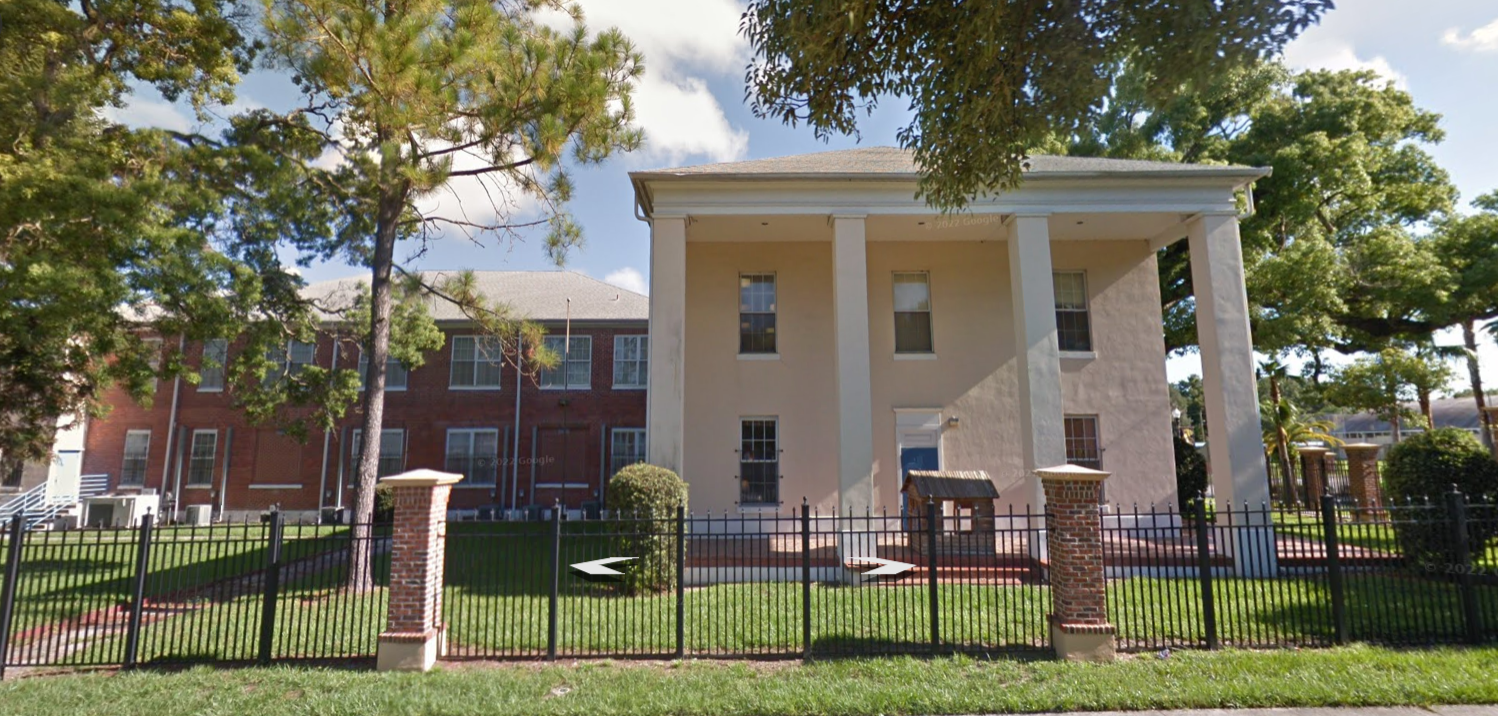 ...and now! Housing our Early Childhood classrooms, administrative wing, library, spanish, and science rooms. Villa Madonna Catholic School community.
 In addition to donating land to found Villa Madonna, Mrs. Neve donated over 100 acres of land to help the Salesian priests establish Mary Help of Christians orphanage in Tampa, providing care and education for young boys in need. That ministry continues today as Cristo Rey High School, still guided by the Salesian priests, carrying forward her enduring legacy of service to youth.
©1980, Novack, Ruth Vincent "Tampa's Little Mother" -
Villa MadonnaToday, almost 400 students from across the region call Villa Madonna Catholic
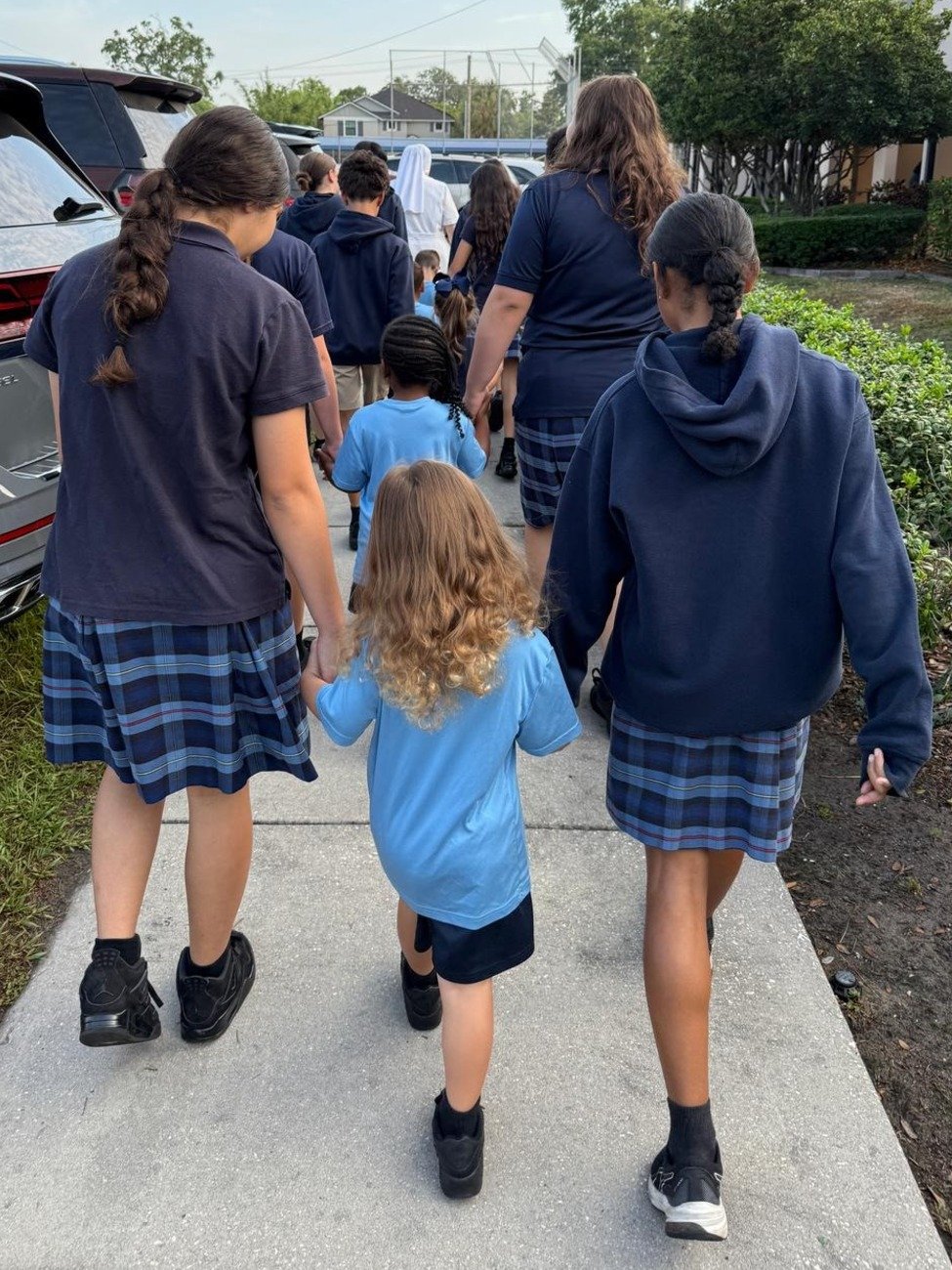 School their home. With intentionally small class sizes, our teachers are able to know each child personally and support their unique needs, ensuring that every student has the opportunity to succeed. Since expanding from Mrs. Neve's house, Villa Madonna has grown into a thriving campus that combines modern classrooms, faith-centered learning, and vibrant extracurricular opportunities.
In 2026, Villa Madonna celebrates 90 years of service to the youth!
Our students benefit from a curriculum rooted in St. John Bosco’s educational philosophy, known as The Preventive System, uses Reason, Religion, and Loving Kindness to reach the heart of youth and guide them toward holiness. Though over 100 years old, this motto remains the foundation of Villa Madonna’s spirit, guiding our faculty, staff, students, and families.At Villa Madonna, education is about the whole child. Following St. Don Bosco’s vision, we provide:
A Home that welcomes, fostering belonging and mutual respect
A School that educates for life, emphasizing academic achievement and moral integrity
A Church that evangelizes
A Playground where children have fun, and friendships flourish
Whether in the classroom, during recess, or in the chapel, the young person feels at home and has opportunities to grow as a student and as a Christian, all while having fun.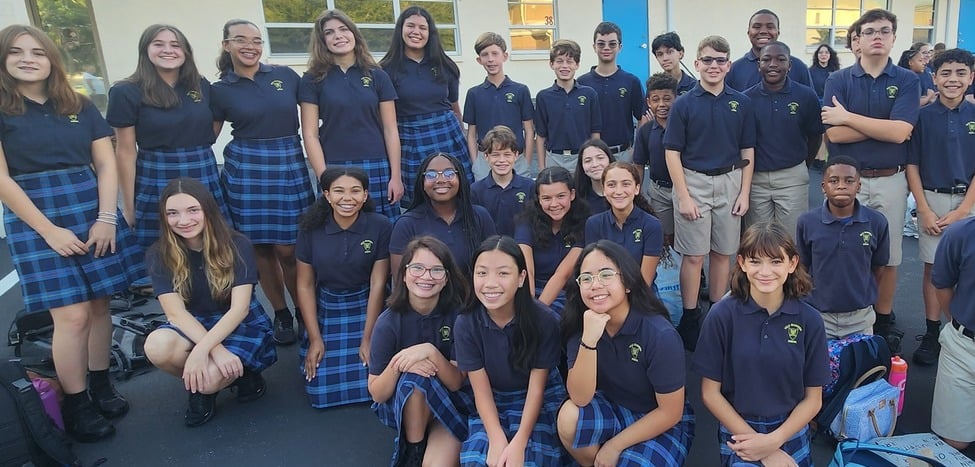
Once a Salesian, always a Salesian! -
The Salesian Youth CenterT
 he Salesian Youth Center (SYC) was founded in 1995 by the Salesian Sisters and is dedicated to serving all children, ages 5 to 18, regardless of ethnic, religious, or economic background. In the early 1990’s, the Sisters started a "Saturday Club", a weekly program that offered needy kids a safe place to play, a hot meal, and tutoring.
Originally located in the cafeteria of Villa Madonna School, this activity grew so popular that the Sisters reached out to the Tampa community for help with a capital campaign that enabled them to take over and renovate the old Jefferson High School Gym. The Sisters were able to expand their services and partnered with Boys & Girls Clubs of Tampa Bay, thus forming the Salesian Youth Center/Boys & Girls Club. Boys & Girls Clubs provides the staffing, while the Salesian Sisters provide everything else. A prominent real estate lawyer in Tampa, Joe Garcia, and his wife Anne Garcia, helped bring together the local community to support the project. The center was later named The Joe & Anne Garcia Salesian Youth Center as a thanks for their time and dedication.
It has since grown into a thriving community that has provided thousands of children a place to gather for a safe, consistent after school program. For more information, visit syctampa.org. -
Who Are the Salesian SistersThe Salesian Sisters are the largest congregation of religious women with over 11,000 Sisters serving in 97 countries. Founded in 1872 by St. John Bosco and St. Mary Mazzarello, the Salesian Sisters are dedicated to reaching the youth for Christ.While St. John Bosco was caring for the boys in Turin, St. Mary Mazzarello was gathering young girls in their
 small village of Mornese, Italy. They taught them how to sew so they could earn money in a way that kept them safe from exploitation. During these lessons, “Mother Mazzarello” also included faith formation, games, and of course, snacks and songs, creating her own “Oratory” similar to what Don Bosco was doing in Turin. When the Holy Spirit brought Don Bosco and Mary Mazzarello together in 1864, it was clear that their missions were remarkably similar and from this encounter, the Daughters of Mary Help of Christians were born.On August 5, 1972, Salesian Sisters of St. John Bosco began with the first profession of Mary Mazzarello and other like-minded young women who joined her in her mission with the young. To D
 The first four missionary sisters, seated is Sr. Angelina, and from the left is Sr. Veneranda, Sr. Antionette, and Sr. Frances.on Bosco and Mother Mazzarello, God entrusted a passion to help young people achieve a better life and to foster in them a desire for holiness. Their work spread rapidly into a worldwide family dedicated to young people. Today, there are over 10,500 sisters in 97 countries worldwide!
On July 16, 1908, the first four missionary Salesian Sisters arrived in New York City. They settled in Paterson, NJ, to begin their ministry with the children of Italian immigrants. The beginnings were challenging, but the Sisters were able to establish schools and youth centers for the Christian education of the young, not only in Paterson but in many places throughout the United States. Including Florida.
July 2008 commemorated 100 years since the arrival of the first four Salesian Sisters in the United States. The Salesian Sisters continue to be actively engaged in ministering to youth and with youth, especially the poor and marginalized. Our centennial theme was "Celebrating Youth... Building the Future!"
© 2024 · Salesian Sisters, https://salesiansisters.org/100-years-in-the-us/ -
Ana Maria Park
Ana Maria Baldor-Bunn (1972–2002) remains a beloved part of Villa Madonna’s heritage. Though she was not a Villa alumna herself, her impact on the school was so great it continues to shape its future to this day.
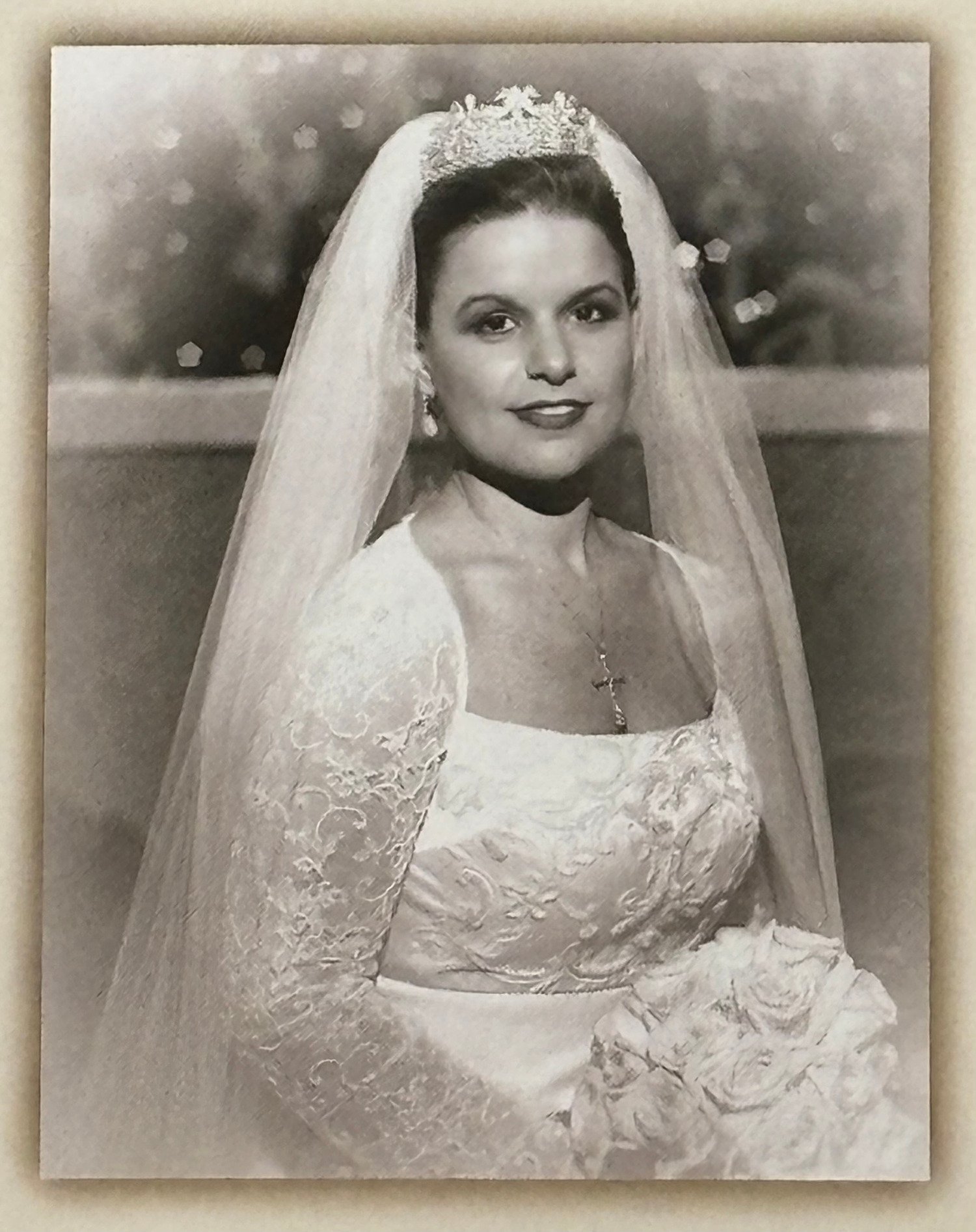
In 2000, while pregnant with her first child, Ana Maria was diagnosed with a rare, life-threatening tumor. Remaining grounded in her faith, she refused treatment and chose to preserve her unborn child, William, from the chemo's harmful effects.
Shortly after the birth of her son William, Ana Maria met Sister Kim, who was the current principal of Villa Madonna. Even though she was growing sicker with each month, without a second thought she turned her heart toward Villa Madonna. She began volunteering her time at the Salesian Youth Center on campus, writing newsletters, and assisting with programs that supported children and families. Even though she knew her time was limited, she chose to spend it serving the young people of the Villa Madonna School community. It was a reflection of the self sacrificial, generous, and loving person people knew her to be, and she remained involved in Villa life right up until her passing in 2002.
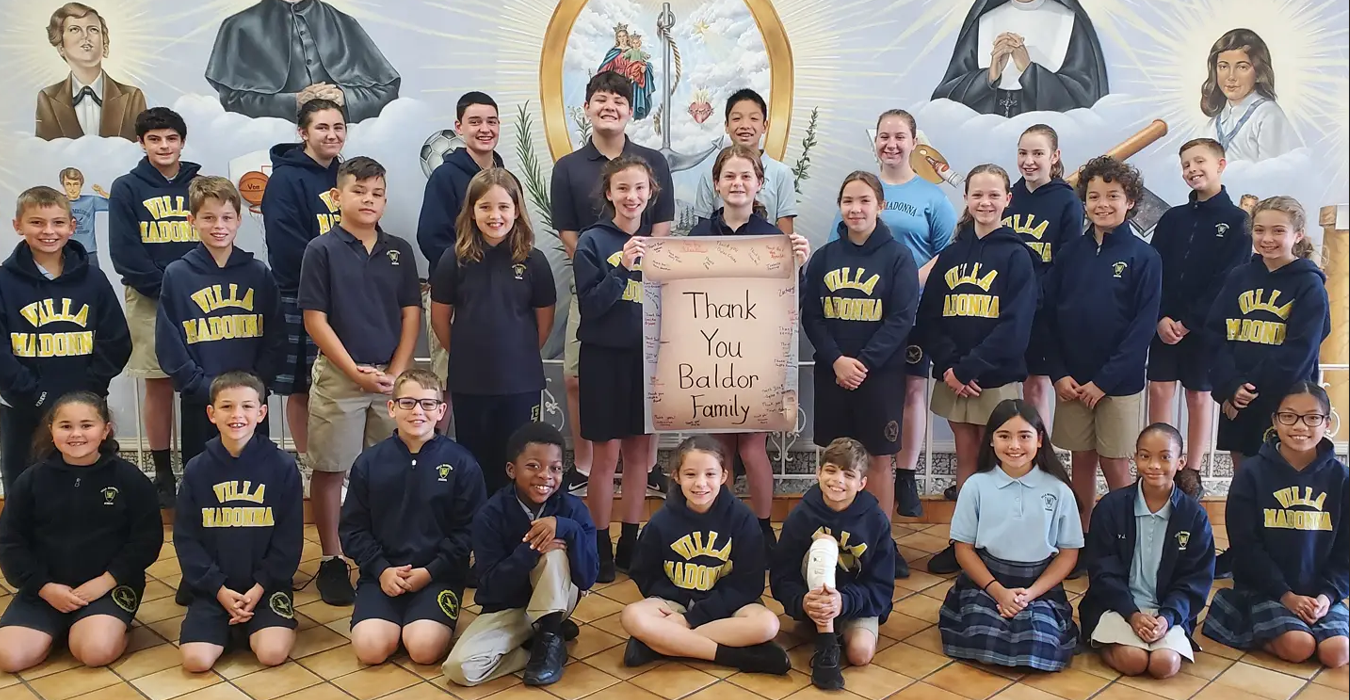
Even in her absence, Ana Maria's example continues to shape the school she so cherished. In 2003, the Baldor family collectively established the Ana Maria Auxilium Awards, a scholarship given each year to one student per grade who demonstrates the virtues she embodied: kindness, responsibility, active faith, good citizenship, and service to others. More than 160 Villa students have carried her legacy forward through this distinction.
Her mem
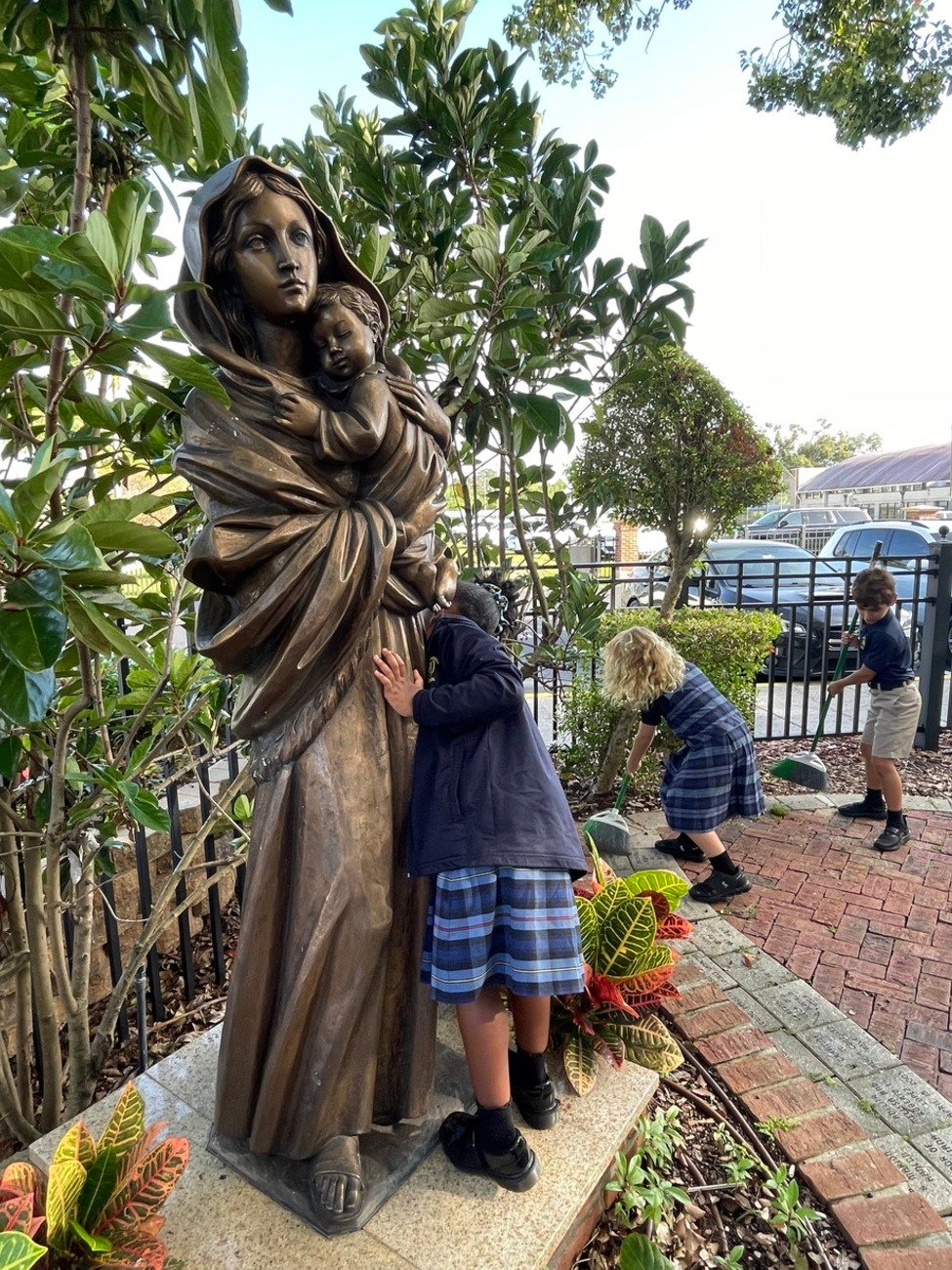 Students polishing the statue and cleaning the the Our Lady of the Streets statue at Ana Maria Parkory also lives on through a physical location on campus, Ana Maria Park, lovingly funded by her family. Today, the park is frequented by the Early Childhood classes, the students from the Boys and Girls Club, and other grades at Villa Madonna. Through the park they are given a space to play, celebrate special events, and pray. The park’s prayer garden features a statue of Our Lady of the Streets, depicting a mother lovingly holding her child. This specific statue offers a powerful reminder of Ana Maria’s great love for her children (especially her son William), her unmoving faith, and the tenderness with which she approached life. Students of Villa Madonna make sure to honor her memory by keeping the statue clean, even personally shining it and sweeping any leaves from her pedestal, and praying a Divine Mercy chaplet for Ana Maria and the Baldor family once a month.
Ana Maria Baldor-Bunn’s legacy continues to inspire every generation of Villa Madonna students. Through the Youth Center she served, the awards given in her honor, and the park that bears her name, her legacy will remain a part of Villa Madonna's history, encouraging students to live with courageous compassion, unwavering faith, and self sacrificial love.
-